Golf Performance Metrics Explained
Every number VectorGOLF tracks — from launch monitor data to scorecard stats to Tangent-enhanced analytics to swing analytics from 3D motion. Click any metric below to see what it means, why it matters, and how to use it to improve.
Trackers below come from a standard SportsBox 3D Player capture.
ADR is Address—the static setup pose SportsBox samples before motion. These trackers are measured at address and available in SportsBox 3D Player; lock the tripod and stance so chest/pelvis turn, side bend, and shaft angle starting points stay comparable session to session.
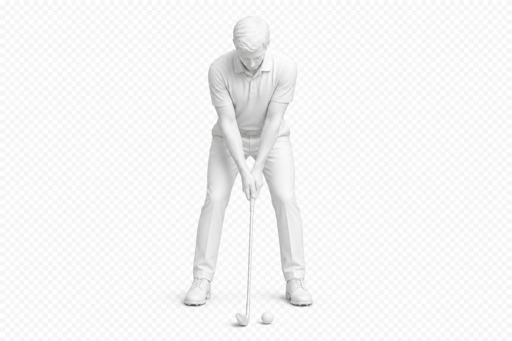
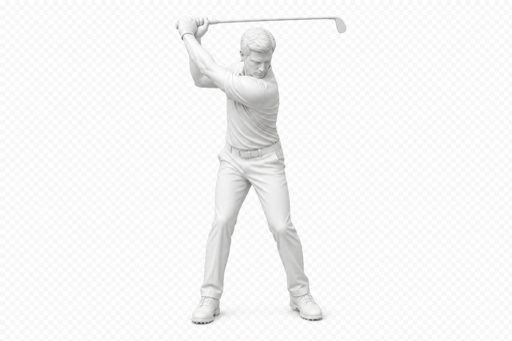
TOP is the top of your backswing—the instant the club stops going back and you're about to start the downswing. It's the most coiled, fully wound position of your swing: chest and pelvis turn, X-Factor stretch, sway/lift, and where the hands and club end up tell you how much power you've loaded and whether you're set up for a balanced transition.
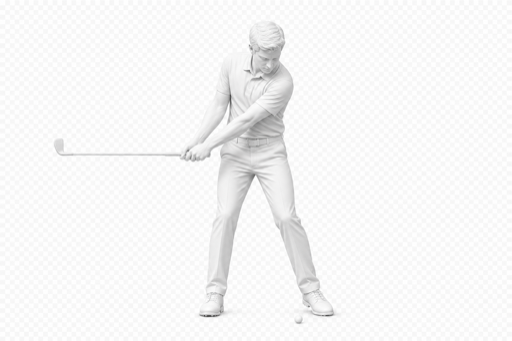
DCH (Downswing Club Horizontal) is the moment on the way down where your club shaft is roughly parallel to the ground—about halfway through the downswing, also called Delivery or P6. It's a key checkpoint for how you're moving into the ball: torso and hip rotation plus a steep-vs-shallow shaft read here tell you if your delivery is on plane before impact.
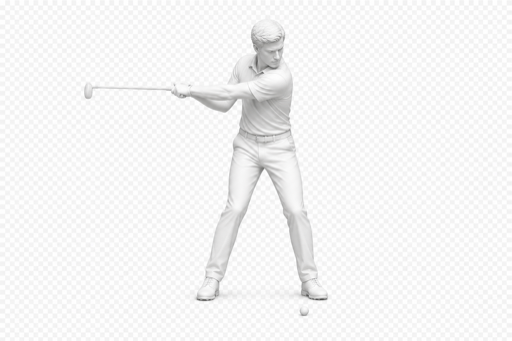
BCH (Backswing Club Horizontal) is the checkpoint on the way up where your club shaft is roughly parallel to the ground—about halfway into the backswing, also called P3. SportsBox samples body and club motion here as you approach the top: hand path, mid-hands sway, lead-wrist angle, and shaft plane at this frame tell you whether you're tracking on plane and loading depth correctly before TOP.
DAH is Delivery, lead Arm Horizontal—the frame on the way down where your lead arm is parallel to the ground, just before impact (sometimes called P6.5). SportsBox reads body, hand, and shaft motion here: lead-wrist angle, shaft plane face-on, chest side bend, and hand height tell you whether you're shallowing properly, retaining wrist angle, and arriving at impact with the right delivery shape.
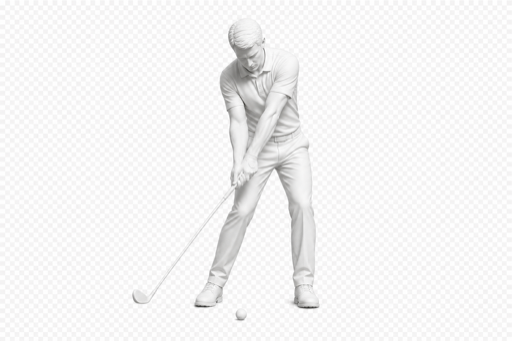
IMP is Impact—the exact instant the clubface meets the ball, sometimes called the "moment of truth." Everything in your swing is about getting here on plan: rotation, sway/lift/side bend, clubhead speed, and release tell the full story of why the ball flew the way it did. Compare these reads with what your launch monitor or on-course shot showed in the same session.
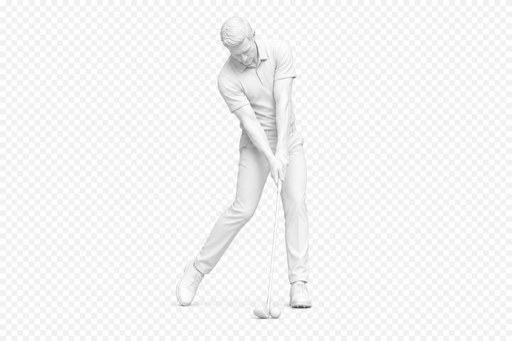
Player Plus (SportsBox "3D Pro" for individuals) is the full-data tier. Thrust (depth / DTL inches) unlocks early-extension and posture-loss diagnostics; kinematic sequencing exposes timing/peak-speed order; gain-factor efficiency quantifies energy transfer between segments; advanced spatial rows split head and bilateral knees from the broader sway/lift composites.
▼ Trackers below are exclusive to Player Plus / 3D Pro ▼
Thrust at TOP measures how far each segment (pelvis, chest, hands, club, head) has moved toward (+) or away (−) from the ball at the top of your backswing. These depth reads only appear in SportsBox 3D Player Plus and are the foundation for diagnosing early extension, posture loss, and depth-driven path issues.
Thrust at BCH (Backswing Club Horizontal) reads where the hands sit in depth halfway back—when the shaft is roughly parallel to the ground on the way up. SportsBox 3D Player Plus only; use it as the depth counterpart to lateral mid-hands sway readings.
Thrust at DCH (Downswing Club Horizontal) reads how each segment is moving in/out of the screen halfway down—pair these depth inches with the steep-vs-shallow shaft angle and chest/pelvis turn at the same DCH frame. SportsBox 3D Player Plus only.
Thrust at Impact (IMP) measures depth at the moment of strike. A late depth snap—pelvis, chest, club, or head pushing toward the ball at impact—pairs with early extension and lift signals; combine with side bend and release diagnostics to read the cause. SportsBox 3D Player Plus only.
Kinematic sequencing uses peak rotational velocity (°/sec) plus the linear mph traces that pair naturally with sequencing timing—distinct from sway/lift inches. Hand and clubhead peaks are summarized here beside shaft and segment °/sec maxima from Player Plus captures.
Efficiency trackers are modeled ratios describing energy flow between segments. Release Factor (max clubhead / max hand mph) stays in @ IMP tiles above—these ratios complement it with pelvic→torso→arm→club gain math from the same Swing Score / 3D Pro pipeline.
Advanced spatial rows split head and bilateral knee translators from broad sway/lift composites—fine-grained for DTL fidelity and diagnosing subtle pressure-shift leaks when Player Plus exposes them.
What is carry distance in golf, and why is it different from total distance on the range?
In plain language, what does "Carry" mean on my monitor or export?
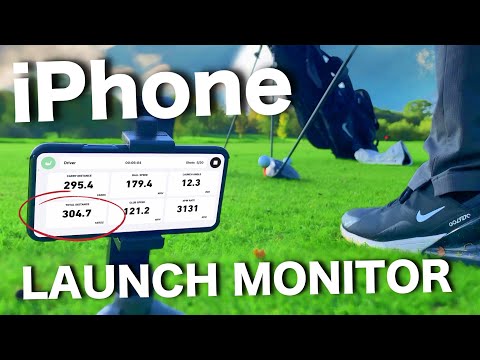
Carry distance is how far the ball travels through the air before it first touches the ground. It excludes roll. Your launch monitor measures this directly from ball speed, launch angle, and spin.
Units: yards
Why does this metric matter for ball flight, dispersion, or scoring?
Carry is your true yardage—what you need for club selection. Roll varies with conditions; carry is consistent. Knowing your carry for each club is the foundation of course management.
What is a typical or competitive range for this stat?
Driver: 250-280 yards (scratch male). 7-iron: 165-175 yards. Wedges: 100-130 yards depending on loft.
What usually makes this number look bad or noisy in real rounds?
Too short: low ball speed, poor contact, or excess spin. Too long: hot conditions or misread. Inconsistent carry across sessions suggests contact or swing path issues.
Vector matches drill videos to your focus—GIR, fairways, putting, tee dispersion.
What other metrics should I look at together with this one?
What is total distance versus carry, and how much does roll really add to my numbers?
In plain language, what does "Total Distance" mean on my monitor or export?
Total distance is carry plus roll. It's the full distance the ball travels from impact to where it comes to rest.
Units: yards
Why does this metric matter for ball flight, dispersion, or scoring?
On firm fairways, total can exceed carry significantly. For approach shots, carry matters more. For drives, total helps with hole strategy.
What is a typical or competitive range for this stat?
Typically 5-15 yards more than carry on dry fairways. Wet conditions reduce roll.
What usually makes this number look bad or noisy in real rounds?
Excess back spin reduces roll. Low launch can increase roll. Hard greens make total less predictable.
Vector matches drill videos to your focus—GIR, fairways, putting, tee dispersion.

What other metrics should I look at together with this one?
What is club head speed, how do I read it on a launch monitor, and what is a decent driver speed?
In plain language, what does "Club Speed" mean on my monitor or export?
Club speed is the velocity of the club head at impact, measured in miles per hour. It's the raw power input before efficiency (smash factor) is applied.
Units: mph
Why does this metric matter for ball flight, dispersion, or scoring?
Club speed sets the ceiling for ball speed. More speed means more distance potential—but only if contact is clean. Speed without control increases dispersion.
What is a typical or competitive range for this stat?
Driver: 90-110 mph (amateurs), 115+ (tour). 7-iron: 75-90 mph. Wedges: 70-85 mph.
What usually makes this number look bad or noisy in real rounds?
Swinging harder often reduces smash factor. Focus on center contact first, then speed. Age and flexibility affect max speed.
Vector matches drill videos to your focus—GIR, fairways, putting, tee dispersion.
What other metrics should I look at together with this one?
What is ball speed in golf, and how does it relate to club speed and smash factor?
In plain language, what does "Ball Speed" mean on my monitor or export?
Ball speed is the velocity of the ball immediately after impact. It's the result of club speed, contact quality (smash factor), and club design.
Units: mph
Why does this metric matter for ball flight, dispersion, or scoring?
Ball speed directly drives distance. It's the most reliable predictor of carry. Improving ball speed—through better contact or more club speed—is the primary lever for distance gains.
What is a typical or competitive range for this stat?
Driver: 140-170 mph. 7-iron: 110-125 mph. Ball speed is typically 1.3-1.5x club speed for irons.
What usually makes this number look bad or noisy in real rounds?
Low ball speed with high club speed = poor contact (low smash). Off-center hits lose significant speed.
Vector matches drill videos to your focus—GIR, fairways, putting, tee dispersion.
What other metrics should I look at together with this one?
What is backspin on a driver or iron, and when is spin too high or too low?
In plain language, what does "Back Spin" mean on my monitor or export?
Back spin is the rotation of the ball around a horizontal axis perpendicular to the flight direction. It creates lift and affects trajectory and stopping power.
Units: rpm
Why does this metric matter for ball flight, dispersion, or scoring?
Back spin controls trajectory height and how much the ball stops on the green. Too little: ball runs out, hard to hold greens. Too much: ballooning, loss of distance, wind vulnerability.
What is a typical or competitive range for this stat?
Driver: 2,000-3,000 rpm. 7-iron: 6,000-7,500 rpm. Wedges: 8,000-10,000+ rpm.
What usually makes this number look bad or noisy in real rounds?
Excess back spin: steep attack, high dynamic loft, or thin contact. Low back spin: shallow path, delofted face, or fat contact.
Vector matches drill videos to your focus—GIR, fairways, putting, tee dispersion.
What other metrics should I look at together with this one?
What is side spin, and how does it relate to curvature and draw versus fade?
In plain language, what does "Side Spin" mean on my monitor or export?
Side spin is the rotation that makes the ball curve left or right in flight. It's created by the difference between club path and face angle—the D-Plane relationship.
Units: rpm
Why does this metric matter for ball flight, dispersion, or scoring?
Side spin determines shot shape. High side spin = more curve = more dispersion. Minimizing side spin (while controlling start direction) is key to consistency.
What is a typical or competitive range for this stat?
Ideal: under 200-250 rpm for most shots. Slices and hooks: 500-1,500+ rpm.
What usually makes this number look bad or noisy in real rounds?
High side spin: face and path misaligned. Face-to-path over 2-3° creates significant curve. Goal: face and path closer together.
Vector matches drill videos to your focus—GIR, fairways, putting, tee dispersion.
What other metrics should I look at together with this one?
What is horizontal launch angle (starting line), and how do I interpret left versus right?
In plain language, what does "Horizontal Launch Angle" mean on my monitor or export?
HLA (Horizontal Launch Angle) is the initial direction the ball leaves the clubface, relative to the target line. Negative = left, positive = right.
Units: degrees
Why does this metric matter for ball flight, dispersion, or scoring?
HLA largely determines where the ball starts. Face angle at impact is the primary driver. For a straight shot, HLA should be near zero.
What is a typical or competitive range for this stat?
Target: ±1.5° for consistency. More than 2-3° off = significant miss.
What usually makes this number look bad or noisy in real rounds?
HLA left: face closed at impact. HLA right: face open. Often correlates with face-to-target. Alignment and path affect face delivery.
Vector matches drill videos to your focus—GIR, fairways, putting, tee dispersion.
What other metrics should I look at together with this one?
What is vertical launch angle, and what is a good launch for driver versus irons?
In plain language, what does "Launch Angle" mean on my monitor or export?
Launch angle (VLA—Vertical Launch Angle) is the angle at which the ball leaves the clubface relative to the ground. It's a key driver of trajectory and distance.
Units: degrees
Why does this metric matter for ball flight, dispersion, or scoring?
Launch angle, combined with spin, determines peak height and carry. Too low: ball runs out, loses distance. Too high: balloons, loses distance into wind.
What is a typical or competitive range for this stat?
Driver: 12°-16°. 7-iron: 16°-19°. Wedges: 20°-28°.
What usually makes this number look bad or noisy in real rounds?
Low launch: delofted face, steep attack, or hitting down too much. High launch: adding loft, thin contact, or high spin.
Vector matches drill videos to your focus—GIR, fairways, putting, tee dispersion.
What other metrics should I look at together with this one?
What is descent angle (land angle), and why does it matter for stopping the ball on greens?
In plain language, what does "Descent Angle" mean on my monitor or export?
Descent angle is the angle at which the ball approaches the ground when it lands. Steeper = more stopping power on greens.
Units: degrees
Why does this metric matter for ball flight, dispersion, or scoring?
Descent angle determines how much the ball runs after landing. Steep descent (40°+) holds greens. Shallow descent (under 35°) runs out, especially on firm surfaces.
What is a typical or competitive range for this stat?
Approach shots: 40°-50° ideal for holding greens. Driver: 35°-42°. Wedges: 45°-55°.
What usually makes this number look bad or noisy in real rounds?
Shallow descent: low launch or low spin. Ball runs through greens. Steep descent: high launch and spin—good for approaches, can cost driver distance.
Vector matches drill videos to your focus—GIR, fairways, putting, tee dispersion.

What other metrics should I look at together with this one?
What is face to target in degrees, and how is it different from face to path?
In plain language, what does "Face to Target" mean on my monitor or export?
Face to Target is the direction the clubface points at impact relative to the target line. It's the primary driver of where the ball starts (HLA).
Units: degrees
Why does this metric matter for ball flight, dispersion, or scoring?
Face to target controls start direction. For a straight shot at the target, face should point at the target. Even small deviations (2-3°) cause significant misses.
What is a typical or competitive range for this stat?
Target: ±1° for precision. More than 2° = noticeable miss direction.
What usually makes this number look bad or noisy in real rounds?
Face closed: ball starts left. Face open: ball starts right. Often a grip, alignment, or release timing issue.
Vector matches drill videos to your focus—GIR, fairways, putting, tee dispersion.
What other metrics should I look at together with this one?
What is face to path, and how does it relate to club path and shot curvature?
In plain language, what does "Face to Path" mean on my monitor or export?
Face to Path is the difference between where the face points and where the club is moving. It's the D-Plane key that determines spin axis and shot curve.
Units: degrees
Why does this metric matter for ball flight, dispersion, or scoring?
Face to path drives side spin and curve. Face left of path = draw/hook. Face right of path = fade/slice. Smaller face-to-path = less curve = tighter dispersion.
What is a typical or competitive range for this stat?
Target: 0° to 2° for controlled curve. Over 3° = significant curve and dispersion.
What usually makes this number look bad or noisy in real rounds?
Large face-to-path: path and face out of sync. Often a sequencing or release issue. The Kinetic Divergence Audit in VectorGOLF reports identifies the primary leak.
Vector matches drill videos to your focus—GIR, fairways, putting, tee dispersion.
What other metrics should I look at together with this one?
What is smash factor, and what is a good smash factor for a driver or a 7 iron?
In plain language, what does "Smash Factor" mean on my monitor or export?
Smash factor is ball speed divided by club speed. It measures impact efficiency—how much of your club speed transfers to the ball. Perfect contact maximizes smash.
Why does this metric matter for ball flight, dispersion, or scoring?
Smash factor reveals contact quality. Same club speed with higher smash = more distance. Low smash means you're leaving yards on the table from off-center or poor contact.
What is a typical or competitive range for this stat?
Driver: 1.45-1.50 (max ~1.50). 7-iron: 1.38-1.42. Wedges: 1.25-1.35.
What usually makes this number look bad or noisy in real rounds?
Low smash: toe/heel hits, thin, or fat. Center contact is the fix. Can't exceed theoretical max for the club.
Vector matches drill videos to your focus—GIR, fairways, putting, tee dispersion.
What other metrics should I look at together with this one?
What does average score mean in my VectorGOLF scorecard insights, and how is it calculated?
In plain language, what does "Average Score" mean on my monitor or export?
Average score is the mean of your 18-hole gross scores across all tracked rounds. It is the most fundamental measure of overall playing ability.
Units: strokes per 18 holes
Why does this metric matter for ball flight, dispersion, or scoring?
Average score captures the full picture — driving, approach, short game, and putting. It is the single best number for tracking improvement over time and setting realistic goals.
What is a typical or competitive range for this stat?
Scratch: 72. Single-digit handicap: 75-82. Mid-handicap: 85-95. High-handicap: 100+.
What usually makes this number look bad or noisy in real rounds?
Blowup holes inflate averages more than steady bogey golf. Tracking eliminates selective memory — you see the real number, not the number you remember.
Vector matches drill videos to your focus—GIR, fairways, putting, tee dispersion.
What other metrics should I look at together with this one?
What are greens in regulation (GIR), and what is a solid GIR percentage for amateurs?
In plain language, what does "GIR" mean on my monitor or export?
GIR (Greens in Regulation) is the percentage of holes where your ball reaches the putting surface in the expected number of strokes: par minus two. On a par 4, that means on the green in 2. Par 3: in 1. Par 5: in 3.
Units: percentage
Why does this metric matter for ball flight, dispersion, or scoring?
GIR is the most statistically correlated metric to scoring. More greens hit = more birdie putts and fewer scrambles needed. It reflects the combined quality of your tee shots and approach play.
What is a typical or competitive range for this stat?
Tour: 65-70%. Scratch: 55-60%. Mid-handicap (15): 30-40%. High-handicap (25+): 10-20%.
What usually makes this number look bad or noisy in real rounds?
Low GIR from poor iron play (distance control, accuracy) or poor driving (leaving bad angles). Improving GIR by even 5% can drop your average score by 2-3 strokes.
Vector matches drill videos to your focus—GIR, fairways, putting, tee dispersion.

What other metrics should I look at together with this one?
What does fairway hit percentage mean, and is fairway width the same as hitting fairways?
In plain language, what does "Fairway Hit %" mean on my monitor or export?
Fairway Hit % measures how often your tee shot on par 4s and par 5s lands in the fairway. It gauges driving accuracy independent of distance.
Units: percentage
Why does this metric matter for ball flight, dispersion, or scoring?
Hitting fairways gives you clean lies, better angles, and more club options for approach shots. Missing fairways leads to penalties, recovery shots, and higher scores. Consistently hitting 60%+ keeps you in play.
What is a typical or competitive range for this stat?
Tour: 60-70%. Scratch: 55-65%. Mid-handicap: 40-55%. High-handicap: 25-40%.
What usually makes this number look bad or noisy in real rounds?
Low fairway % often points to a dominant miss direction (slice, hook). Check your Miss Right and Miss Left percentages to identify the pattern. Equipment (driver loft, shaft) can also help.
Vector matches drill videos to your focus—GIR, fairways, putting, tee dispersion.
What other metrics should I look at together with this one?
What does miss right percentage tell me about my miss pattern off the tee?
In plain language, what does "Miss Right %" mean on my monitor or export?
Miss Right % is the percentage of tee shots (par 4s and par 5s) that miss the fairway to the right. Combined with Miss Left %, it reveals your dominant miss pattern.
Units: percentage of fairway misses
Why does this metric matter for ball flight, dispersion, or scoring?
Knowing your miss direction is essential for course strategy and swing diagnosis. A high miss-right % (for a right-handed golfer) typically indicates an open face or out-to-in path — the classic slice pattern. This data helps you aim smarter and practice with purpose.
What is a typical or competitive range for this stat?
Balanced: under 15% each direction. Dominant miss: 20%+ one side. Severe: 30%+ one side.
What usually makes this number look bad or noisy in real rounds?
Persistent miss-right: open face at impact, weak grip, or out-to-in swing path. Check Face to Target and Face to Path in your launch monitor data for the root cause.
Vector matches drill videos to your focus—GIR, fairways, putting, tee dispersion.
What other metrics should I look at together with this one?
What does miss left percentage tell me about my miss pattern off the tee?
In plain language, what does "Miss Left %" mean on my monitor or export?
Miss Left % is the percentage of tee shots (par 4s and par 5s) that miss the fairway to the left. The mirror of Miss Right %, it completes your directional miss profile.
Units: percentage of fairway misses
Why does this metric matter for ball flight, dispersion, or scoring?
A high miss-left % (for a right-handed golfer) suggests a closed face or strong in-to-out path — the hook pattern. This is critical for aim strategy: if you miss left 25% of the time, you should aim further right on tight holes.
What is a typical or competitive range for this stat?
Balanced: under 15% each direction. Dominant miss: 20%+ one side. Severe: 30%+ one side.
What usually makes this number look bad or noisy in real rounds?
Persistent miss-left: closed face, strong grip, or excessive in-to-out path. If you also have high side spin in your launch data, the face-path relationship is the root cause.
Vector matches drill videos to your focus—GIR, fairways, putting, tee dispersion.
What other metrics should I look at together with this one?
What are putts per round, and how many putts is reasonable for an 18-hole round?
In plain language, what does "Putts per Round" mean on my monitor or export?
Putts per round is the average total number of putts across 18 holes. It is the simplest measure of putting performance — but it can be misleading without context from GIR.
Units: putts per 18 holes
Why does this metric matter for ball flight, dispersion, or scoring?
Putting accounts for roughly 40% of all strokes. Reducing putts per round even by 1-2 has a direct impact on scoring. However, more GIRs usually means more putts (longer first putts), so always evaluate putts in context.
What is a typical or competitive range for this stat?
Tour: 28-29. Scratch: 29-31. Mid-handicap: 32-36. High-handicap: 36+.
What usually makes this number look bad or noisy in real rounds?
High putts/round: poor distance control on lag putts, three-putts, or poor green reading. Low putts/round can also mean you aren't hitting greens (chipping close and one-putting). Context matters — check Putts GIR and Putts nGIR.
Vector matches drill videos to your focus—GIR, fairways, putting, tee dispersion.
What other metrics should I look at together with this one?
What does putts when I miss the green in regulation (nGIR) measure, and why track it?
In plain language, what does "Putts nGIR" mean on my monitor or export?
Putts nGIR is the average number of putts on holes where you missed the green in regulation. It measures your ability to get up-and-down — chip close and save par (or bogey).
Units: putts per hole (missed greens only)
Why does this metric matter for ball flight, dispersion, or scoring?
Most amateurs miss more greens than they hit. If your nGIR putting average is below 2.0, your short game is bailing you out. Above 2.2, you are leaving strokes on the table when you miss the green.
What is a typical or competitive range for this stat?
Tour: 1.6-1.8. Scratch: 1.8-2.0. Mid-handicap: 2.0-2.3. High-handicap: 2.3+.
What usually makes this number look bad or noisy in real rounds?
High nGIR putts: poor chipping (leaving long second putts) or poor short-range putting. Improving chip-to-a-distance to under 10 feet brings this number down fast.
Vector matches drill videos to your focus—GIR, fairways, putting, tee dispersion.
What other metrics should I look at together with this one?
What does putts when I hit the green in regulation (GIR) mean, and why is it useful?
In plain language, what does "Putts GIR" mean on my monitor or export?
Putts GIR is the average number of putts on holes where you hit the green in regulation. It is the truest measure of putting skill because it eliminates short-game variability — you are putting from regulation distance.
Units: putts per hole (GIR holes only)
Why does this metric matter for ball flight, dispersion, or scoring?
When you hit a GIR, your first putt is typically 20-40 feet. Averaging under 1.8 putts per GIR means you're making birdie putts or consistently two-putting. Above 2.0 means three-putts are killing your scores.
What is a typical or competitive range for this stat?
Tour: 1.72-1.78. Scratch: 1.78-1.85. Mid-handicap: 1.85-2.0. High-handicap: 2.0+.
What usually makes this number look bad or noisy in real rounds?
High Putts GIR: poor lag putting (leaving 4+ feet for second putt), poor green reading, or inconsistent speed control. Focus on getting first putts inside 3 feet.
Vector matches drill videos to your focus—GIR, fairways, putting, tee dispersion.
What other metrics should I look at together with this one?
What is strokes gained total, and how should I read it in amateur scorecard stats?
In plain language, what does "Strokes Gained Total" mean on my monitor or export?
Strokes Gained (SG) Total is the sum of all strokes gained categories: tee, approach, short game, and putting. It measures how many strokes per round you gain (or lose) compared to a baseline — typically scratch or PGA Tour average.
Units: strokes per round (positive = better than baseline)
Why does this metric matter for ball flight, dispersion, or scoring?
SG Total is the gold standard for evaluating overall performance. Unlike raw score, it accounts for course difficulty and shot context. A positive SG Total means you are outperforming the baseline — and the breakdown shows exactly where.
What is a typical or competitive range for this stat?
Tour average: 0. Top tour players: +2 to +4. Scratch amateur: -1 to 0. Mid-handicap: -4 to -8. High-handicap: -10+.
What usually makes this number look bad or noisy in real rounds?
SG Total is only as good as its components. One strong area can mask a weakness. Always break it down into SG Tee, Approach, Short, and Putting to find where to practice.
Vector matches drill videos to your focus—GIR, fairways, putting, tee dispersion.
What other metrics should I look at together with this one?
What is strokes gained off the tee, and what counts as a tee shot for this metric?
In plain language, what does "Strokes Gained Tee" mean on my monitor or export?
SG Tee measures how much your tee shots (typically drives on par 4s and par 5s) gain or lose compared to the baseline. It factors in both distance and accuracy — not just whether you hit the fairway.
Units: strokes per round
Why does this metric matter for ball flight, dispersion, or scoring?
Driving is the highest-leverage shot category. A good tee shot leaves a shorter, cleaner approach. SG Tee captures this better than fairway % alone because it accounts for distance — a 280-yard fairway hit gains more than a 220-yard fairway hit.
What is a typical or competitive range for this stat?
Tour leaders: +1.0 to +1.5. Tour average: 0. Scratch: -0.5 to 0. Mid-handicap: -1.0 to -2.5.
What usually makes this number look bad or noisy in real rounds?
Negative SG Tee: usually distance or penalty strokes from OB/water. Short but accurate drivers can still have positive SG Tee if they avoid big misses.
Vector matches drill videos to your focus—GIR, fairways, putting, tee dispersion.
What other metrics should I look at together with this one?
What is strokes gained approach, and which yardages count as approach play?
In plain language, what does "Strokes Gained Approach" mean on my monitor or export?
SG Approach measures how much your approach shots (typically the 2nd shot on par 4s, 2nd/3rd on par 5s, tee shots on par 3s) gain or lose vs. the baseline. It captures both distance to the pin and whether you hit the green.
Units: strokes per round
Why does this metric matter for ball flight, dispersion, or scoring?
Approach play is where the best players separate themselves. PGA Tour data consistently shows that SG Approach has the highest correlation with money earned. Good approach play means more GIRs, closer birdie putts, and fewer scrambles.
What is a typical or competitive range for this stat?
Tour leaders: +1.0 to +1.5. Tour average: 0. Scratch: -0.5 to 0. Mid-handicap: -1.5 to -3.0.
What usually makes this number look bad or noisy in real rounds?
Negative SG Approach: poor distance control, misses short-sided, or wrong club selection. Launch monitor data (carry, back spin, descent angle) feeds directly into improving approach quality.
Vector matches drill videos to your focus—GIR, fairways, putting, tee dispersion.
What other metrics should I look at together with this one?
What is strokes gained around the green (short game) in simple terms?
In plain language, what does "Strokes Gained Short Game" mean on my monitor or export?
SG Short Game measures how your chips, pitches, and bunker shots (within ~50 yards of the green, excluding putts) compare to the baseline. It captures scrambling ability — turning missed greens into pars.
Units: strokes per round
Why does this metric matter for ball flight, dispersion, or scoring?
Most amateurs miss 50-70% of greens. Your short game determines whether those misses become bogeys or pars. Positive SG Short Game means you are recovering better than the baseline — which directly saves strokes.
What is a typical or competitive range for this stat?
Tour leaders: +0.5 to +1.0. Tour average: 0. Scratch: -0.3 to 0. Mid-handicap: -0.5 to -1.5.
What usually makes this number look bad or noisy in real rounds?
Negative SG Short: chunked chips, skulled pitches, or poor distance control from bunkers. Focus on getting chips within 6 feet of the hole for an achievable one-putt.
Vector matches drill videos to your focus—GIR, fairways, putting, tee dispersion.
What other metrics should I look at together with this one?
What is strokes gained putting, and how is it different from total putts?
In plain language, what does "Strokes Gained Putting" mean on my monitor or export?
SG Putting measures how your putting performance compares to the baseline, accounting for putt distance. Unlike total putts, it gives credit for making long putts and penalizes missing short ones — distance-adjusted putting quality.
Units: strokes per round
Why does this metric matter for ball flight, dispersion, or scoring?
Raw putts per round is misleading because it doesn't account for putt distance. SG Putting is the true putting metric. A player who two-putts from 40 feet every time has excellent SG Putting. A player who three-putts from 15 feet has terrible SG Putting.
What is a typical or competitive range for this stat?
Tour leaders: +0.5 to +1.0. Tour average: 0. Scratch: -0.3 to 0. Mid-handicap: -0.5 to -2.0.
What usually makes this number look bad or noisy in real rounds?
Negative SG Putting: missing putts inside 8 feet, three-putting from 25+ feet, or inconsistent green reading. Lag putting (getting the first putt within 3 feet) is the fastest fix for most amateurs.
Vector matches drill videos to your focus—GIR, fairways, putting, tee dispersion.
What other metrics should I look at together with this one?
What is average proximity to the hole, and why is feet not always the whole story?
In plain language, what does "Average Proximity" mean on my monitor or export?
Average proximity is the mean distance from the pin after all shots tracked by Tangent — across all shot types (drives, approaches, chips, etc.). It provides a general sense of how close your shots finish to the hole.
Units: feet
Why does this metric matter for ball flight, dispersion, or scoring?
Proximity to the pin is a leading indicator of scoring. Closer approach shots mean shorter putts, more birdies, and fewer three-putts. Tracking proximity over time shows whether your shot quality is improving.
What is a typical or competitive range for this stat?
Tour (approaches): 30-35 ft. Scratch amateur: 35-45 ft. Mid-handicap: 45-60 ft. This metric covers all shots, so typical values will be higher than approach-only proximity.
What usually makes this number look bad or noisy in real rounds?
High average proximity: poor distance control, wrong club, or bad miss direction. Improving iron carry consistency and green reading directly reduces proximity.
Vector matches drill videos to your focus—GIR, fairways, putting, tee dispersion.
What other metrics should I look at together with this one?
What is approach proximity versus overall average proximity on my report?
In plain language, what does "Approach Proximity" mean on my monitor or export?
Approach proximity is the average distance from the pin after approach shots specifically — 2nd shot on par 4s, 3rd shot on par 5s, and tee shot on par 3s. This isolates your ability to attack pins when it matters most.
Units: feet
Why does this metric matter for ball flight, dispersion, or scoring?
Approach proximity is the single best predictor of birdie opportunities. Tour players average 30-35 feet on approaches. Getting under 40 feet consistently gives you makeable birdie putts and eliminates long lag putts that lead to three-putts.
What is a typical or competitive range for this stat?
Tour: 30-35 ft. Scratch amateur: 35-42 ft. Mid-handicap: 42-55 ft. High-handicap: 55+ ft.
What usually makes this number look bad or noisy in real rounds?
High approach proximity: inconsistent carry distance, poor aim (short-siding yourself), or wrong club selection. Use your launch monitor carry data for each club to make smarter decisions on approach.
Vector matches drill videos to your focus—GIR, fairways, putting, tee dispersion.
What other metrics should I look at together with this one?
What does penalties per round mean, and how do penalty strokes show up in analytics?
In plain language, what does "Penalties per Round" mean on my monitor or export?
Penalties per round is the average number of penalty strokes incurred across 18 holes. This includes OB, water, lost balls, and unplayable lies — shots that add strokes without advancing play.
Units: penalty strokes per 18 holes
Why does this metric matter for ball flight, dispersion, or scoring?
Penalty strokes are the highest-cost mistakes in golf. Every penalty is a full stroke added to your score with zero progress toward the hole. Reducing penalties from 2.0 to 0.5 per round is an instant 1.5-stroke improvement — often easier than gaining strokes through swing changes.
What is a typical or competitive range for this stat?
Tour: 0.2-0.5. Scratch: 0.3-0.8. Mid-handicap: 1.0-2.0. High-handicap: 2.0-4.0+.
What usually makes this number look bad or noisy in real rounds?
High penalties: driver OB, water hazards on approach, or lost balls in the rough. Course management is the fix — lay up, aim away from trouble, and accept bogey over double. Know your miss pattern (Miss Right/Left) and play away from hazards on that side.
Vector matches drill videos to your focus—GIR, fairways, putting, tee dispersion.
What other metrics should I look at together with this one?
Chest Bend @ ADR
What it measures
SportsBox.ai 3D Player trackers at the Address phase (ADR), the official SportsBox Swing Position code for setup before motion. Chest Bend describes forward/back sagittal spinal flexion of the torso versus the kinematic baseline at Address. It is distinct from Chest Side Bend (lateral tilt) and from Chest Turn (rotation about the spine). Match the phase label printed beside the number in SportsBox as “@ ADR” and mirror the app sign convention for spine direction.
Units: degrees
Why it matters
Posture at ADR anchors every later comparison (TOP, DCH, DAH); small setup drift reshapes modeled shaft plane and torso angles through the swing.
Vector matches drill videos to your focus—contact, shot shape, start line, D-Plane.
Related metrics
Pelvis Bend @ ADR
What it measures
SportsBox Pelvis Bend at Address (ADR): sagittal flexion / tilt measurement on the pelvis versus setup baseline. Separate from Pelvis Side Bend @ ADR, pelvic Turn once motion begins, and from Lift/Sway/Thrust trackers at later positions. Interpret signs strictly from SportsBox pelvic segment labeling at ADR exports.
Units: degrees
Why it matters
Stacks with Chest Bend ADR when auditing setup intent and feeds context for IMP thrust anomalies later.
Vector matches drill videos to your focus—contact, shot shape, start line, D-Plane.
Related metrics
Chest Side Bend @ ADR
What it measures
SportsBox Chest Side Bend at Address (ADR): lateral upper-spine tilt in the modeling frame versus ball/target line at setup. This row isolates Address only—contrast it with Chest Side Bend values reported at TOP or IMP in other columns. Coordinate reads with Chest Bend @ ADR and Shaft Angle @ ADR.
Units: degrees
Why it matters
Even modest lateral bias presets hand-path baselines visible after takeaway and interacts with sway-gap math once torso translation begins.
Vector matches drill videos to your focus—contact, shot shape, start line, D-Plane.
Related metrics
Pelvis Side Bend @ ADR
What it measures
SportsBox Pelvis Side Bend at Address (ADR): coronal-plane lateral tilt registered on the pelvis tracker at setup. Not the sagittal Bend field, not Turn, Lift, Sway, or Thrust. Confirm “@ ADR” on the spreadsheet / Swings row you log into Vector Golf.
Units: degrees
Why it matters
Balances chest side bend cues for ground-force anticipation and informs whether hip line aim matches visual intent before motion.
Vector matches drill videos to your focus—contact, shot shape, start line, D-Plane.
Related metrics
Shaft Angle @ ADR
What it measures
Face-on modeled shaft-plane angle at SportsBox Address (ADR) immediately before takeaway—not Shaft Plane @ DAH nor any DCH shaft-horizontal read. Club length, lie, spine stacks (Chest/Pelvis Bend + Side Bend), grip, stance width, and ball position materially feed this statistic before kinematics propagate.
Units: degrees
Why it matters
Acts as linkage between torso bend trackers and downstream delivery-plane diagnostics on the same camera lock.
Vector matches drill videos to your focus—contact, shot shape, start line, D-Plane.
Related metrics
Chest Bend @ ADR, Shaft Angle @ DCH, Shaft plane angle @ DAH, Lead wrist angle @ DAH
Chest Turn @ TOP
What it measures
SportsBox Chest Turn at the TOP key-frame (completion of backswing in their Swing Positions guide). Rotation of the chest segment around the vertical (spine) axis in the face-on 3D solve. Sign convention: (−) closed to the target, (+) open. Pair the same-session row with Pelvis Turn @ TOP and X-Factor @ TOP for stretch context.
Units: degrees
Why it matters
Anchors coil magnitude at TOP before transition—compare trending ranges with Body Turn averages and sway/lift stacks at TOP.
Vector matches drill videos to your focus—contact, shot shape, start line, D-Plane.
Related metrics
Pelvis Turn @ TOP, X-Factor @ TOP, Chest Turn, Chest Sway @ TOP, Chest Bend @ TOP, Chest Turn @ DCH, Chest Turn @ IMP
Pelvis Turn @ TOP
What it measures
SportsBox Pelvis Turn @ TOP—the hip segment’s rotation about its vertical-axis convention at completion of backswing, matching the Chest Turn row from the identical TOP instant. Signs mirror Chest Turn labeling in-app ((−) closed, (+) open). Use beside X-Factor @ TOP (angular separation) versus peak speed sequencing (different metric family).
Units: degrees
Why it matters
Separates pelvic coil from torso coil at TOP and explains why turn totals differ from generalized Pelvis Turn @[POS] rows without phase tags.
Vector matches drill videos to your focus—contact, shot shape, start line, D-Plane.
Related metrics
Chest Turn @ TOP, X-Factor @ TOP, Pelvis Turn, Pelvis Sway @ TOP, Pelvis Turn @ DCH, Pelvis Turn @ IMP
X-Factor @ TOP
What it measures
SportsBox-style X-Factor at TOP: torso–pelvis rotational separation measured in degrees at the same TOP key-frame—conceptually Chest Turn minus Pelvis Turn per SportsBox nomenclature. It is angular stretch at setup of transition, NOT the Downswing Core speed gain factor (which compares peak rotational speeds later). NEVER mix this metric with sway gap inches or speed ratios logged elsewhere.
Units: degrees
Why it matters
Single-number summary of coil stretch; coaches pair with Chest/Pelvis Sway/Lift stacks and Mid-Hands traces at TOP for quality control.
Vector matches drill videos to your focus—contact, shot shape, start line, D-Plane.
Related metrics
Chest Turn @ TOP, Pelvis Turn @ TOP, Speed Gain (Pelvis to Chest), Sway Gap @ IMP, X-Factor @ IMP
Chest Sway @ TOP
What it measures
Official Chest Sway @ TOP—lateral (side-to-side) displacement of the chest trace versus Address at completion of backswing. Sign: (+) toward target, (−) toward trail. Anchor reads with Pelvis Sway @ TOP plus Sway gap analytics when shown.
Units: inches
Why it matters
Shows whether the torso drifts versus stable coil while hips load—surfaced beside pelvis sway for dissociation stories.
Vector matches drill videos to your focus—contact, shot shape, start line, D-Plane.
Related metrics
Sway Gap @ IMP, Pelvis Sway @ TOP, Chest Turn @ TOP, Chest Sway @ DCH, Chest Sway @ IMP
Pelvis Sway @ TOP
What it measures
Official Pelvis Sway @ TOP—lateral hip displacement versus Address at TOP per SportsBox labeling. Pair with Chest Sway @ TOP to interpret upper–lower dissociation narratives.
Units: inches
Why it matters
Slides vs true rotation surface distinctly here when layered with Pelvis Turn @ TOP.
Vector matches drill videos to your focus—contact, shot shape, start line, D-Plane.
Related metrics
Chest Sway @ TOP, Pelvis Turn @ TOP, Pelvis Lift @ TOP, Pelvis Sway @ DCH, Pelvis Sway @ IMP
Chest Lift @ TOP
What it measures
Official Chest Lift @ TOP—vertical thorax translator versus Address at TOP. Stacks with Chest Bend @ TOP for posture audits alongside lift/sway combos.
Units: inches
Why it matters
Elevated lift often aligns with perceived loss of inclination through transition.
Vector matches drill videos to your focus—contact, shot shape, start line, D-Plane.
Related metrics
Chest Bend @ TOP, Head lift @ BSW max, Pelvis Lift @ TOP, Mid-Hands Lift @ TOP, Chest Lift @ IMP
Pelvis Lift @ TOP
What it measures
Official Pelvis Lift @ TOP—vertical pelvis translator versus Address at TOP paired with pelvic sway and turn trackers at the identical frame.
Units: inches
Why it matters
Quiet vertical pelvis complements grounded transition cues when compared with chest lift numbers.
Vector matches drill videos to your focus—contact, shot shape, start line, D-Plane.
Related metrics
Chest Lift @ TOP, Pelvis Sway @ TOP, Pelvis Turn @ TOP, Pelvis Lift @ IMP
Chest Bend @ TOP
What it measures
SportsBox Chest Bend (forward/back torso flexion versus model baseline) anchored at TOP. Separate from Chest Side Bend @ TOP (lateral tilt) and Chest Turn (rotation). Contrast Chest Bend @ ADR to quantify how torso pitch evolved from Address through coil completion.
Units: degrees
Why it matters
Explains torso pitch deltas while arms/finish wind—guides posture-loss narratives before transition firing.
Vector matches drill videos to your focus—contact, shot shape, start line, D-Plane.
Related metrics
Chest Bend @ ADR, Chest Lift @ TOP, Chest Turn @ TOP, Chest Side Bend @ TOP
Chest Side Bend @ TOP
What it measures
SportsBox Chest Side Bend at TOP: lateral upper-spine tilt in the modeling frame versus target/ball at completion of backswing. Separate from Chest Side Bend @ ADR exports and generic multi-phase Side Bend rows lacking explicit POS tags—mirror the spelled POS beside your spreadsheet cell.
Units: degrees
Why it matters
Feeds plane planning into DAH/DCH references while pairing naturally with rotational + bend stacks at TOP.
Vector matches drill videos to your focus—contact, shot shape, start line, D-Plane.
Related metrics
Chest Side Bend @ ADR, Chest Side Bend, Chest Side Bend @ IMP, Shaft plane angle @ DAH, Chest Turn @ TOP
Overall swing score (Swing Score)
What it measures
In Sportsbox 3DGolf this headline number is usually labeled Universal Swing Score or Swing Score: a single 1–100-style index built from your full-swing 3D capture. Per Sportsbox’s documentation, you start a Swing Score assessment from the app’s home experience (pick iron or driver, hit at least three swings, then generate the score). The Overall Swing Score is derived from three peer-ranked components—Speed Score, Efficiency Score, and Consistency Score—each expressed as a gender-based percentile versus their database, then combined into one summary. It is not the same as handicap, but Sportsbox reports a strong statistical link between Swing Score and scoring ability in large samples; treat it as a motion-quality index, not a substitute for on-course results.
Units: 1–100 index
Why it matters
Gives you one stable number to compare across weeks when camera setup is locked—ideal as the first field to log in Vector after each Sportsbox session alongside the three sub-scores.
Vector matches drill videos to your focus—contact, shot shape, start line, D-Plane.
Related metrics
Swing speed rank vs peers, Motion efficiency rank vs peers, Swing repeatability vs peers
Swing speed rank vs peers
What it measures
How “fast” your swing moves in the 3D model compared with others of your gender in the reference database—hands, shaft, and club segments combined into one speed rank.
Units: percentile
Why it matters
Speed sets the ceiling for distance. If this rank is low but radar ball speed is fine, capture may differ from the range—or you may be efficient but not explosive.
Vector matches drill videos to your focus—contact, shot shape, start line, D-Plane.
Related metrics
Overall swing score (Swing Score), Motion efficiency rank vs peers, Maximum hand speed
Motion efficiency rank vs peers
What it measures
How effectively your body and club transfer motion toward the ball—kinematic “bang for buck,” not raw speed alone.
Units: percentile
Why it matters
Explains why two golfers with similar hand speed can get different smash and carry. Points to sequencing, release, and how segments work together.
Vector matches drill videos to your focus—contact, shot shape, start line, D-Plane.
Motion efficiency rank vs peers — How power moves through the swing (kinematic sequence)
Watch on YouTube →
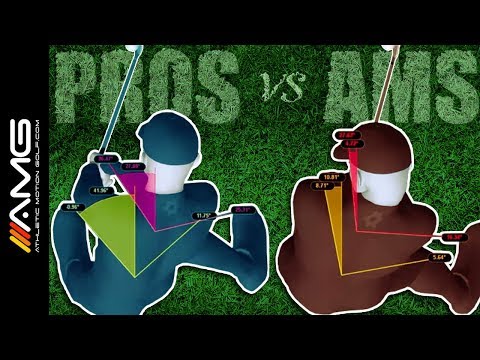
Motion efficiency rank vs peers — Rotation patterns: what better ball‑strikers do differently
Watch on YouTube →
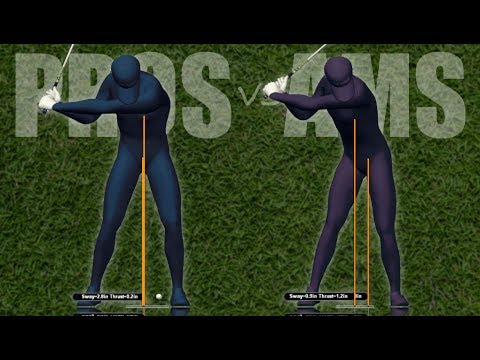
Motion efficiency rank vs peers — Lateral motion versus staying stacked over the ball
Watch on YouTube →
Related metrics
Overall swing score (Swing Score), Release: hands to clubhead transfer, Speed Gain (Pelvis to Chest)
Transition order (% in range)
What it measures
When Sportsbox ranks how well your segment timing matches an in-app reference band, the session row may show a “% in range” (or similarly worded) statistic for transition / sequencing. Naming varies by export—match the label beside your Efficiency view. Log the number the app prints for that assessment block.
Units: % in range
Why it matters
Pairs with Efficiency Score to show whether the kinematic sequence—not just positions—is sitting in the cohort window you care about.
Vector matches drill videos to your focus—contact, shot shape, start line, D-Plane.
Related metrics
Motion efficiency rank vs peers, Speed Gain (Pelvis to Chest), Release: hands to clubhead transfer
Swing repeatability vs peers
What it measures
How repeatable your tracked motion signatures are swing to swing, expressed as a percentile versus your cohort.
Units: percentile
Why it matters
Better striking usually needs both a sound pattern and a repeatable one. Shows whether your new move is actually stabilizing.
Vector matches drill videos to your focus—contact, shot shape, start line, D-Plane.
Swing repeatability vs peers — Rotation patterns: what better ball‑strikers do differently
Watch on YouTube →
Swing repeatability vs peers — Lateral motion versus staying stacked over the ball
Watch on YouTube →

Swing repeatability vs peers — Contact and face control drills (ties to repeatable motion)
Watch on YouTube →
Related metrics
Overall swing score (Swing Score), Backswing time, Downswing time, Chest Lift @ TOP, Chest Sway @ TOP
Chest Turn
What it measures
Official Sportsbox-style indicator: Chest Turn @ [POS]—rotation of the chest segment around the vertical (spine) axis in the face-on 3D solve, reported at the phase named in your row (TOP, IMP, etc.). Sign convention: (−) closed to the target, (+) open. This is a core tracker in the six degrees of freedom for the torso and is available on Free, Player, and Player+ (Free tier includes a limited number of swings per month). X-Factor at the same phase is the angular difference between Chest Turn and Pelvis Turn (not the downswing speed ratio; see Core speed gain factor).
Units: degrees
Why it matters
Describes coil and delivery rotation—width, depth, and the hands path people feel as “turn.” Central to sequencing with the hips.
Vector matches drill videos to your focus—contact, shot shape, start line, D-Plane.
Related metrics
Pelvis Turn, Pelvis Turn @ TOP, X-Factor @ TOP, Speed Gain (Pelvis to Chest), Chest Side Bend, Chest Turn @ TOP, Chest Turn @ DCH, Chest Turn @ IMP
Pelvis Turn
What it measures
Official indicator: Pelvis Turn @ [POS]—rotation of the pelvis around the vertical axis with the same sign convention as chest turn: (−) closed, (+) open. Core tracker (Free / Player / Player+). Pair with Chest Turn at the same phase; X-Factor (stretch) is chest minus pelvis turn in degrees at that phase.
Units: degrees
Why it matters
The pelvis usually leads the kinematic sequence in transition. Timing and range here strongly influence torso and club delivery.
Vector matches drill videos to your focus—contact, shot shape, start line, D-Plane.
Related metrics
Chest Turn, Sway Gap @ IMP, Clubhead Speed Max, Pelvis Thrust @ IMP, Pelvis Turn @ TOP, Pelvis Turn @ DCH, Pelvis Turn @ IMP
Pelvis Thrust @ IMP
What it measures
Official Thrust (DTL) family: Pelvis Thrust @ [POS]—here @ IMP. Forward/away-from-setup displacement of the pelvis toward the ball in the depth direction used in down-the-line analysis; typically Player / Player+ with 3D Player. Interpret (+) as hips thrusting toward the ball (“early extension” context in coaching language versus standing up out of posture). Pairs with Chest Side Bend and turn metrics.
Units: inches
Why it matters
Ties to low point control, compression, and how late you brace the lead side. Coaches pair thrust with torso side bend.
Vector matches drill videos to your focus—contact, shot shape, start line, D-Plane.
Related metrics
Chest Side Bend, Chest Side Bend @ IMP, Chest Thrust @ IMP, Chest Thrust @ TOP, Club Head Thrust @ IMP, Pelvis Lift @ IMP, Pelvis Thrust @ TOP, Pelvis Turn, Pelvis Turn @ IMP, Sway Gap @ IMP
Chest Turn @ IMP
What it measures
SportsBox Chest Turn at the IMP (Impact) key frame—face-on rotation of the chest versus address at the strike instant: (−) closed to target, (+) open. In current SportsBox builds the on-screen guide for this row is typically a narrow band near ~19–21° (club and cohort overlays can nudge it). Log the value from the row explicitly labeled IMP; do not substitute Chest Turn @ TOP or unpooled “Chest Turn” without a phase tag.
Units: degrees
Why it matters
Shows how open the torso is through the ball relative to setup—pairs with Pelvis Turn @ IMP and X-Factor @ IMP for stretch and sequencing at the strike window.
Vector matches drill videos to your focus—contact, shot shape, start line, D-Plane.
Related metrics
Pelvis Turn @ IMP, X-Factor @ IMP, Chest Turn @ TOP, Chest Turn @ DCH, Chest Turn
Pelvis Turn @ IMP
What it measures
SportsBox Pelvis Turn @ IMP—the hip rotation about the SportsBox convention at Impact, synced with Chest Turn @ IMP for stretch math. Interpret signs identical to torso rows ((−) closed, (+) open).
Units: degrees
Why it matters
Shows how much pelvic rotation remains into strike—guides thrust, sway, early extension, and low-point diagnoses.
Vector matches drill videos to your focus—contact, shot shape, start line, D-Plane.
Related metrics
Chest Turn @ IMP, X-Factor @ IMP, Pelvis Turn @ DCH, Pelvis Turn @ TOP, Pelvis Turn
X-Factor @ IMP
What it measures
SportsBox-style X-Factor at IMP—the angular torso–pelvis stretch (degrees) at Impact, conceptually Chest Turn minus Pelvis Turn at the IMP instant. Different from Downswing core speed sequencing ratios (often labeled Speed gain / timing rows). NEVER swap this IMP stretch number for TOP stretch without relabeling the phase.
Units: degrees
Why it matters
Snapshots how much separation survives into strike—a headline metric for kinematic sequencing reviews next to sway/lift columns.
Vector matches drill videos to your focus—contact, shot shape, start line, D-Plane.
Related metrics
X-Factor @ TOP, Chest Turn @ IMP, Pelvis Turn @ IMP, Speed Gain (Pelvis to Chest)
Chest Sway @ IMP
What it measures
SportsBox Chest Sway @ IMP—face-on lateral displacement versus Address at Impact. Interpret signs strictly from SportsBox (+ toward target is common)—not thrust depth traces.
Units: inches
Why it matters
Anchors torso translation myths at strike—pair Pelvis Sway @ IMP plus Sway gap when both export.
Vector matches drill videos to your focus—contact, shot shape, start line, D-Plane.
Related metrics
Pelvis Sway @ IMP, Sway Gap @ IMP, Chest Sway @ TOP, Chest Sway @ DCH
Pelvis Sway @ IMP
What it measures
SportsBox Pelvis Sway @ IMP—hip lateral translator versus Address at Impact; read beside Chest Sway @ IMP.
Units: inches
Why it matters
Separates rotational delivery from hips sliding toward the ball when stacked with thrust and turn rows.
Vector matches drill videos to your focus—contact, shot shape, start line, D-Plane.
Related metrics
Chest Sway @ IMP, Pelvis Thrust @ IMP, Pelvis Turn @ IMP, Pelvis Sway @ DCH, Pelvis Sway @ TOP
Chest Lift @ IMP
What it measures
SportsBox Chest Lift @ IMP—vertical chest translation versus Address at Impact; stacks with Chest Side Bend @ IMP for torso posture narratives.
Units: inches
Why it matters
Elevated IMP lift often parallels standing up/out of inclination—pair Pelvis Lift + Thrust IMP when exported.
Vector matches drill videos to your focus—contact, shot shape, start line, D-Plane.
Related metrics
Pelvis Lift @ IMP, Chest Lift @ TOP, Chest Side Bend @ IMP, Pelvis Thrust @ IMP
Pelvis Lift @ IMP
What it measures
SportsBox Pelvis Lift @ IMP—vertical pelvic translation versus Address at Impact; aligns with torso lift cues for posture-through-strike QA.
Units: inches
Why it matters
Shows how much the hips elevate relative to Address while club meets ball—informs early-extension discussions next to thrust rows.
Vector matches drill videos to your focus—contact, shot shape, start line, D-Plane.
Related metrics
Chest Lift @ IMP, Pelvis Lift @ TOP, Pelvis Thrust @ IMP, Pelvis Turn @ IMP
Chest Side Bend @ IMP
What it measures
SportsBox Chest Side Bend @ IMP—upper-spine lateral tilt in the modeled frame at Impact. Distinct from Chest Side Bend @ ADR/TOP exports and generic multi-phase Chest Side Bend rows missing explicit IMP tags.
Units: degrees
Why it matters
Explains torso incline beside the strike—stack with Rotation + Lift + Thrust IMP for complete posture-of-impact.
Vector matches drill videos to your focus—contact, shot shape, start line, D-Plane.
Related metrics
Chest Side Bend @ ADR, Chest Side Bend @ TOP, Chest Side Bend, Pelvis Thrust @ IMP, Shaft plane angle @ DAH
Chest Side Bend
What it measures
Official Side Bend tracker: Chest Side Bend @ [POS]—side tilt of the upper spine (trail shoulder lower vs lead in the face-on view). Typically Player / Player+ for full DTL context. Distinct from Chest Bend (forward/back “tilt” of the spine), which is a separate Pro-level stream when the app exposes it. Read the phase column beside your value (TOP vs IMP, etc.).
Units: degrees
Why it matters
Helps shallow or steep delivery dynamics and supports head/spine stability through impact alongside rotation.
Vector matches drill videos to your focus—contact, shot shape, start line, D-Plane.
Related metrics
Chest Turn, Chest Side Bend @ ADR, Chest Side Bend @ TOP, Chest Side Bend @ IMP, Shaft plane angle @ DAH, Lead wrist angle @ DAH
Mid-Hands Sway @ BSW max
What it measures
Face-on lateral position of the mid-hands trace at maximum backswing—side-to-side drift. Naming in exports may read “Hand sway BSW max.” Advanced/DTL packages also expose Mid-Hands Thrust @ [POS] (toward/away from ball—depth); that is not the same column as this lateral sway read. Sign follows the app (trail vs target). Player / Player+ for full Pro kinematics.
Units: inches
Why it matters
Shows whether the handle wanders horizontally while you coil. Coaches often tie excess sway to losing pressure and sequencing into transition.
Vector matches drill videos to your focus—contact, shot shape, start line, D-Plane.
Related metrics
Mid-Hands Lift @ TOP
What it measures
Mid-hands vertical position @ TOP relative to address—distinct from max hand lift anywhere in the backswing. Pro dashboards may additionally list Mid-Hands Thrust @ [POS] for depth toward/away from the ball; do not mix that thrust column with this lift column.
Units: inches
Why it matters
Anchors wrist depth consistency at the logical end of pivot; complements chest lift diagnostics when stacking pieces of the motion capture skeleton.
Vector matches drill videos to your focus—contact, shot shape, start line, D-Plane.
Related metrics
Mid-Hands Sway @ BSW max, Head lift @ BSW max, Club–Hand Gap @ DCH, Chest Lift @ TOP
Chest Turn @ DCH
What it measures
SportsBox Chest Turn at DCH—the official Swing Position where the shaft is about horizontal midway through the downswing (often called P6). Same rotational convention as Chest Turn @[POS]: (−) closed to target, (+) open versus address orientation. Read only from exports or Swings rows that spell “DCH”; do not substitute DAH/arm-parallel frames.
Units: degrees
Why it matters
Shows torso rotation entering delivery before the arms reach horizontal—coach checkpoint for sequencing and early extension tendencies when paired with Pelvis Turn + sway @ the same POS.
Vector matches drill videos to your focus—contact, shot shape, start line, D-Plane.
Related metrics
Pelvis Turn @ DCH, Chest Sway @ DCH, Chest Turn @ TOP, Chest Turn, Shaft Angle @ DCH, Chest Turn @ IMP
Pelvis Turn @ DCH
What it measures
SportsBox Pelvis Turn at DCH—pelvic rotation versus address at the same shaft-horizontal checkpoint as Chest Turn @ DCH and Club–Hand Gap @ DCH. Signs mirror torso rotation convention in-app.
Units: degrees
Why it matters
Shows whether hips are clearing, stalling, or sliding as the club shallow/steep story unfolds beside Shaft Angle @ DCH.
Vector matches drill videos to your focus—contact, shot shape, start line, D-Plane.
Related metrics
Chest Turn @ DCH, Pelvis Sway @ DCH, Pelvis Turn @ TOP, Pelvis Turn, Pelvis Turn @ IMP
Chest Sway @ DCH
What it measures
SportsBox Chest Sway @ DCH—face-on lateral translation of the chest trace versus Address at the DCH shaft-horizontal instant. Interpret signs strictly from SportsBox (+ toward target commonly). Not Thrust/DTL depth; pair thrust columns separately if exported.
Units: inches
Why it matters
Shows whether thorax slides off its Address baseline while transitioning—context for steep/shallow narratives next to pelvic sway.
Vector matches drill videos to your focus—contact, shot shape, start line, D-Plane.
Related metrics
Pelvis Sway @ DCH, Sway Gap @ IMP, Chest Sway @ TOP, Club–Hand Gap @ DCH
Pelvis Sway @ DCH
What it measures
SportsBox Pelvis Sway @ DCH—lateral hip displacement versus Address at DCH paired with Chest Sway @ DCH reads from the identical export row.
Units: inches
Why it matters
Slides versus rotation become obvious once Pelvis Turn @ DCH joins this trace—guides early extension diagnostics before impact thrust rows.
Vector matches drill videos to your focus—contact, shot shape, start line, D-Plane.
Related metrics
Chest Sway @ DCH, Pelvis Turn @ DCH, Pelvis Sway @ TOP, Pelvis Thrust @ IMP
Shaft Angle @ DCH
What it measures
Face-on modeled shaft-plane angle when SportsBox stamps the shaft-horizontal DCH key frame (distinct from Shaft Plane @ ADR setup and Shaft Plane @ DAH when the lead arm is parallel). Coaches use steep versus shallow labels here—the same tripod lock as Shaft Plane @ ADR comparisons matters more than chasing tour snapshots.
Units: degrees
Why it matters
Planes the club on the way down while wrist lag and torso rotation evolve; pair Club–Hand Gap @ DCH and later DAH shaft rows for sequencing stories.
Vector matches drill videos to your focus—contact, shot shape, start line, D-Plane.
Related metrics
Club–Hand Gap @ DCH, Shaft Angle @ ADR, Shaft plane angle @ DAH, Chest Turn @ DCH
Club–Hand Gap @ DCH
What it measures
Signed club vs. hand spacing when the shaft is about horizontal midway down (official key frame DCH). In Pro/DTL language this sits beside Club Head Thrust and Mid-Hands Thrust reads that describe depth into/out of the screen—log the same POS label your export uses. Not a ruler-only “positive gap.”
Units: inches
Why it matters
Sequences with wrist hinge, torso rotation into delivery, and how much shaft you shallow or steepen before impact.
Vector matches drill videos to your focus—contact, shot shape, start line, D-Plane.
Related metrics
Shaft Angle @ DCH, Chest Turn @ DCH, Shaft plane angle @ DAH, Lead wrist angle @ DAH, Release: hands to clubhead transfer
Lead wrist angle @ DAH
What it measures
Sportsbox’s public key-frame list uses seven codes (ADR, BCH, TOP, DCH, IMP, FCH, FIN—see their Key Swing Positions guide). “DAH” is not on that list, but many Swings-tab exports and coaches use DAH to mean the downswing checkpoint where the lead arm (forearm) is roughly parallel to the ground in the face-on 3D solve—the same delivery window this glossary previously called “arm parallel.” It is a different moment from DCH, where the club shaft is parallel to the ground (pair with Club–Hand Gap @ DCH). Match the exact label spelling in your session summary. There is no single universal “best” degree for every golfer/club pairing; prioritize repeatability at a locked camera before chasing a textbook midpoint.
Units: degrees
Why it matters
Relates to dynamic loft, shaft plane, and how you store or release lag before impact. Steady numbers here—low scatter on identical framing—usually matter more than parking on one exact degree borrowed from someone else.
Vector matches drill videos to your focus—contact, shot shape, start line, D-Plane.
Lead wrist angle (delivery checkpoint) — Shaft and wrist angles near impact
Watch on YouTube →
Lead wrist angle (delivery checkpoint) — How sequencing affects shaft plane halfway down
Watch on YouTube →
Lead wrist angle (delivery checkpoint) — Posture and tilt through the hitting area
Watch on YouTube →
Related metrics
Shaft plane angle @ DAH, Release: hands to clubhead transfer, Motion efficiency rank vs peers
Shaft plane angle @ DAH
What it measures
Face-on shaft orientation at the DAH delivery instant (lead arm ~horizontal in the 3D model). DCH is a different official key frame: shaft parallel to the ground in the downswing (see Club–Hand Gap @ DCH). Player / Player+–class delivery read. Compare like with like across sessions.
Units: degrees
Why it matters
Shows steep vs shallow delivery relative to the body on a repeatable camera setup.
Vector matches drill videos to your focus—contact, shot shape, start line, D-Plane.
Related metrics
Shaft Angle @ DCH, Shaft Angle @ ADR, Lead wrist angle @ DAH, Chest Side Bend, Clubhead Speed Max
Sway Gap @ IMP
What it measures
SportsBox Sway Gap at Impact (IMP): lateral difference between chest sway and pelvis sway in the model at the strike instant (chest minus pelvis). Positive means the thorax sits relatively closer to the target than the hips in side-to-side space. X-Factor uses turn (degrees), not this lateral gap.
Units: inches
Why it matters
Captures upper–lower dissociation through the ball: how much the thorax moves relative to the hips while both slide. Pairs with Chest Sway @ IMP and Pelvis Sway @ IMP for strike-window translation reads.
Vector matches drill videos to your focus—contact, shot shape, start line, D-Plane.
Related metrics
Chest Sway @ IMP, Pelvis Sway @ IMP, Chest Turn @ IMP, Pelvis Turn @ IMP, Chest Side Bend
Tempo: backswing vs downswing
What it measures
Backswing time divided by downswing time. Full swings often sit near 3:1 for driver—backswing takes about three times as long as the downswing.
Units: ratio
Why it matters
Rhythm and transition quality show up here before small technique details do.
Vector matches drill videos to your focus—contact, shot shape, start line, D-Plane.
Related metrics
Backswing time, Downswing time, Time from peak hand speed to impact
Backswing time
What it measures
Time from address to the end of the backswing.
Units: seconds
Why it matters
Sets the rhythm window for loading and transition. Sudden changes often track intent changes or transition issues.
Vector matches drill videos to your focus—contact, shot shape, start line, D-Plane.
Related metrics
Tempo: backswing vs downswing, Downswing time, Swing repeatability vs peers
Downswing time
What it measures
Time from top of backswing to impact.
Units: seconds
Why it matters
Works with tempo and hand-speed timing to describe how abruptly you move from transition to release.
Vector matches drill videos to your focus—contact, shot shape, start line, D-Plane.
Related metrics
Tempo: backswing vs downswing, Backswing time, Time from peak hand speed to impact
Clubhead Speed Max
What it measures
Maximum modeled clubhead linear speed (mph) tracked through delivery and strike. SportsBox 3D Player dashboards often emphasize a singular max-number read aligned with Impact (IMP) even though kinematic peaks can sit a beat before/after the ball per detection—mirror the headline label beside your spreadsheet cell and cross-check range radar whenever possible.
Units: mph
Why it matters
Anchors how fast the club travels into the hitting window—a primary bridge between 3D capture and flight when Release factor is layered on.
Vector matches drill videos to your focus—contact, shot shape, start line, D-Plane.
Related metrics
Maximum hand speed, Release: hands to clubhead transfer, Chest Turn @ IMP, X-Factor @ IMP, Pelvis Turn
Maximum hand speed
What it measures
Maximum linear speed of the hands (or midpoint grip trace) through the downswing.
Units: mph
Why it matters
Practical proxy for how fast you move the handle into release; pairs with release transfer and peak clubhead speed.
Vector matches drill videos to your focus—contact, shot shape, start line, D-Plane.
Related metrics
Time from peak hand speed to impact, Release: hands to clubhead transfer, Clubhead Speed Max
Release: hands to clubhead transfer
What it measures
Ratio of peak clubhead speed to peak hand speed—kinematic cousin to smash factor: how well hand speed shows up as clubhead speed.
Units: ratio
Why it matters
Healthy release transfers energy through the shaft instead of holding angles too long or flipping early.
Vector matches drill videos to your focus—contact, shot shape, start line, D-Plane.
Release: hands to clubhead transfer — Why arm‑only speed often tops out early
Watch on YouTube →
Release: hands to clubhead transfer — Transferring speed from body segments into the club
Watch on YouTube →
Release: hands to clubhead transfer — Creating solid impact for more usable ball speed
Watch on YouTube →
Related metrics
Clubhead Speed Max, Maximum hand speed, Shaft plane angle @ DAH, Motion efficiency rank vs peers
Speed Gain (Pelvis to Chest)
What it measures
Ratio of maximum chest rotational speed to maximum pelvis rotational speed in the downswing—a kinematic sequencing metric. It is not X-Factor: in Sportsbox-style wording X-Factor @ [POS] is the angular separation between Chest Turn and Pelvis Turn (degrees at the same phase), not a ratio of peak speeds.
Units: ratio
Why it matters
Summarizes pelvic-to-thoracic peak-speed sequencing—not positional X-Factor stretch degrees at fixed POS snapshots; ties to stretch-recoil sequencing language and Pelvis/Torso kinematic timelines.
Vector matches drill videos to your focus—contact, shot shape, start line, D-Plane.
Related metrics
Chest Turn, Pelvis Turn, Motion efficiency rank vs peers, X-Factor @ IMP, X-Factor @ TOP
Time from peak hand speed to impact
What it measures
Elapsed time from maximum hand speed in the downswing to impact.
Units: ms
Why it matters
Shows whether peak handle speed is early or late versus the ball—a lever for release and pressure-shift coaching.
Vector matches drill videos to your focus—contact, shot shape, start line, D-Plane.
Related metrics
Maximum hand speed, Downswing time, Tempo: backswing vs downswing
Head lift @ BSW max
What it measures
Vertical rise of the forehead/head tracker at peak backswing versus setup (not driver launch angle). Face-on postural drift—often grouped with consistency reads next to the Lift and Turn trackers.
Units: inches
Why it matters
Excess lift often tracks with early extension patterns later in the swing and can change path and low point without you feeling it.
Vector matches drill videos to your focus—contact, shot shape, start line, D-Plane.
Related metrics
Mid-Hands Sway @ BSW max, Chest Side Bend, Shaft plane angle @ DAH, Chest Lift @ TOP
Pelvis Thrust @ TOP
What it measures
SportsBox Pelvis Thrust row at TOP: pelvic depth translator toward (+) or away (−) from the ball versus Address on the calibrated DTL solve. Separate from pelvic Sway (lateral translator) or Pelvis Lift.
Units: inches
Why it matters
Depth at TOP diagnoses whether hips deepen or drift while you coil—Player Plus prerequisite for stacking pelvis IMP thrust narratives.
Vector matches drill videos to your focus—contact, shot shape, start line, D-Plane.
Related metrics
Chest Thrust @ TOP
What it measures
SportsBox Chest Thrust @ TOP—the thoracic depth translator toward (+) or away (−) from Address at TOP on the DTL solve.
Units: inches
Why it matters
Pairs with pelvic thrust TOP to split lateral sway/lift from depth responsibilities through the finish of the backswing.
Vector matches drill videos to your focus—contact, shot shape, start line, D-Plane.
Related metrics
Chest Thrust @ IMP
What it measures
SportsBox Chest Thrust @ IMP—torso depth toward (+) or away (−) from Address at Impact on the DTL depth axis.
Units: inches
Why it matters
Explains thorax depth into the strike window beside pelvis thrust IMP and torso rotation IMP.
Vector matches drill videos to your focus—contact, shot shape, start line, D-Plane.
Related metrics
Pelvis Thrust @ IMP, Chest Turn @ IMP, Chest Side Bend @ IMP
Mid-Hands Thrust @ BCH
What it measures
SportsBox Mid-Hands Thrust @ BCH—handle depth toward (+) or away (−) from Address at Backswing Club Horizontal (BCH). Distinct from lateral Mid-Hands Sway columns.
Units: inches
Why it matters
Makes DTL capture meaningful halfway back—bridges to Mid-Hands Thrust @ DCH and Club–Hand Gap.
Vector matches drill videos to your focus—contact, shot shape, start line, D-Plane.
Related metrics
Mid-Hands Sway @ BSW max, Mid-Hands Lift @ TOP, Mid-Hands Thrust @ DCH
Mid-Hands Thrust @ DCH
What it measures
SportsBox Mid-Hands Thrust @ DCH—handle depth toward (+) or away (−) from Address at the shaft-horizontal DCH instant.
Units: inches
Why it matters
Depth twin to Club–Hand Gap @ DCH when isolating early delivery—log identical POS labels.
Vector matches drill videos to your focus—contact, shot shape, start line, D-Plane.
Related metrics
Club Head Thrust @ TOP
What it measures
SportsBox Club Head Thrust @ TOP—clubhead depth excursion toward (+) or away (−) from Address at TOP on calibrated DTL space.
Units: inches
Why it matters
Shows club-level depth interplay with torso/arm thrust rows through completion of coil.
Vector matches drill videos to your focus—contact, shot shape, start line, D-Plane.
Related metrics
Club Head Thrust @ IMP
What it measures
SportsBox Club Head Thrust @ IMP—clubhead depth translator along the calibrated depth ray versus Address at Impact.
Units: inches
Why it matters
Adds club-side depth QA beside pelvis/chest IMP thrust stacks for compression + low-point triage.
Vector matches drill videos to your focus—contact, shot shape, start line, D-Plane.
Related metrics
Head Thrust @ TOP
What it measures
SportsBox Head Thrust @ TOP—depth excursion of the modeled head center toward (+) or away (−) from Address at TOP on DTL kinematics.
Units: inches
Why it matters
Separates subtle cranial depth drift from rotational-only diagnostics while you pivot.
Vector matches drill videos to your focus—contact, shot shape, start line, D-Plane.
Related metrics
Head Thrust @ IMP
What it measures
SportsBox Head Thrust @ IMP—depth translator for the head centroid toward (+) or away (−) from Address at Impact.
Units: inches
Why it matters
Keeps cervical context inside IMP thrust bundles with pelvis + chest IMP rows.
Vector matches drill videos to your focus—contact, shot shape, start line, D-Plane.
Related metrics
Shaft Swing Speed Max
What it measures
Peak modeled rotational shaft velocity (degrees per second)—Player Plus kinematic stream, distinct from positional shaft-angle rows @ ADR/DCH/DAH.
Units: degrees per second
Why it matters
Anchors kinematic sequencing with torso/pelvis deg/sec peaks and linear club mph summaries.
Vector matches drill videos to your focus—contact, shot shape, start line, D-Plane.
Related metrics
Pelvis Turn Speed Max, Chest Turn Speed Max, Clubhead Speed Max
Lead Upper Arm Swing Speed Max
What it measures
Peak rotational velocity (degrees per second) of the modeled lead upper-arm segment in Player Plus kinematics.
Units: degrees per second
Why it matters
Shows how kinematic torso energy passes into arm rotation before wrists fire.
Vector matches drill videos to your focus—contact, shot shape, start line, D-Plane.
Related metrics
Chest Turn Speed Max, Speed Gain (Arm to Shaft), Release: hands to clubhead transfer
Pelvis Turn Speed Max
What it measures
Peak modeled pelvic rotational velocity (degrees per second)—kinematics companion to positional Pelvis Turn @ TOP/IMP/etc.
Units: degrees per second
Why it matters
Upstream ceiling for kinematic sequencing; quiet peaks often bottleneck downstream torso/arm velocities.
Vector matches drill videos to your focus—contact, shot shape, start line, D-Plane.
Related metrics
Chest Turn Speed Max
What it measures
Peak modeled torso rotational velocity (degrees per second)—distinct from instantaneous Chest Turn @ IMP/TOP positional snapshots.
Units: degrees per second
Why it matters
Couples pelvic deg/sec sequencing with downstream arm kinematics.
Vector matches drill videos to your focus—contact, shot shape, start line, D-Plane.
Related metrics
Speed Gain (Chest to Arm)
What it measures
Player Plus modeled ratio translating peak torso (chest) kinematic dominance into downstream lead-arm peak speed—mirror the Efficiency / kinematic Gain label from SportsBox verbatim. Distinct from Release Factor (mph) and from positional X-Factor degrees.
Units: ratio
Why it matters
Targets kinematic whip efficiency between torso and arms before wrists release.
Vector matches drill videos to your focus—contact, shot shape, start line, D-Plane.
Related metrics
Chest Turn Speed Max, Lead Upper Arm Swing Speed Max, Speed Gain (Arm to Shaft)
Speed Gain (Arm to Shaft)
What it measures
Player Plus ratio describing how peak arm kinematics feed shaft rotational kinematics—the final kinematic bridge before mph-based Release Factor summarizes club vs hands.
Units: ratio
Why it matters
Explains downstream shaft deg/sec viability before clubhead peaks realize.
Vector matches drill videos to your focus—contact, shot shape, start line, D-Plane.
Related metrics
Shaft Swing Speed Max, Lead Upper Arm Swing Speed Max, Release: hands to clubhead transfer
Forehead Sway
What it measures
Fine-grained lateral translator for forehead/head center versus baseline when Player Plus separates head kinematics from aggregated torso sway composites.
Units: inches
Why it matters
Shows stealth cranial drift other sway rows obscure.
Vector matches drill videos to your focus—contact, shot shape, start line, D-Plane.
Related metrics
Forehead Lift
What it measures
Vertical translator for forehead/head center baseline splits on Player Plus spatial exports.
Units: inches
Why it matters
Separates cranial vertical motion from torso lift ladders.
Vector matches drill videos to your focus—contact, shot shape, start line, D-Plane.
Related metrics
Lead Knee Sway
What it measures
Independent lateral modeled translator for the lead knee baseline row on Player Plus knee splits.
Units: inches
Why it matters
Isolates lead posting vs drifting independent of pelvic sway aggregates.
Vector matches drill videos to your focus—contact, shot shape, start line, D-Plane.
Related metrics
Lead Knee Lift
What it measures
Vertical translator for modeled lead knee height relative baseline on Player Plus knee splits.
Units: inches
Why it matters
Captures squat-to-post interplay on the lead joint.
Vector matches drill videos to your focus—contact, shot shape, start line, D-Plane.
Related metrics
Trail Knee Sway
What it measures
Independent lateral modeled translator for the trail knee baseline row on Player Plus knee splits.
Units: inches
Why it matters
Explains rear-side stability independent of pelvic sway aggregates.
Vector matches drill videos to your focus—contact, shot shape, start line, D-Plane.
Related metrics
Trail Knee Lift
What it measures
Vertical translator for modeled trail knee height baseline row on Player Plus knee splits.
Units: inches
Why it matters
Captures rear-leg squat/extension interplay—pairs with pelvic lift metrics.
Vector matches drill videos to your focus—contact, shot shape, start line, D-Plane.